
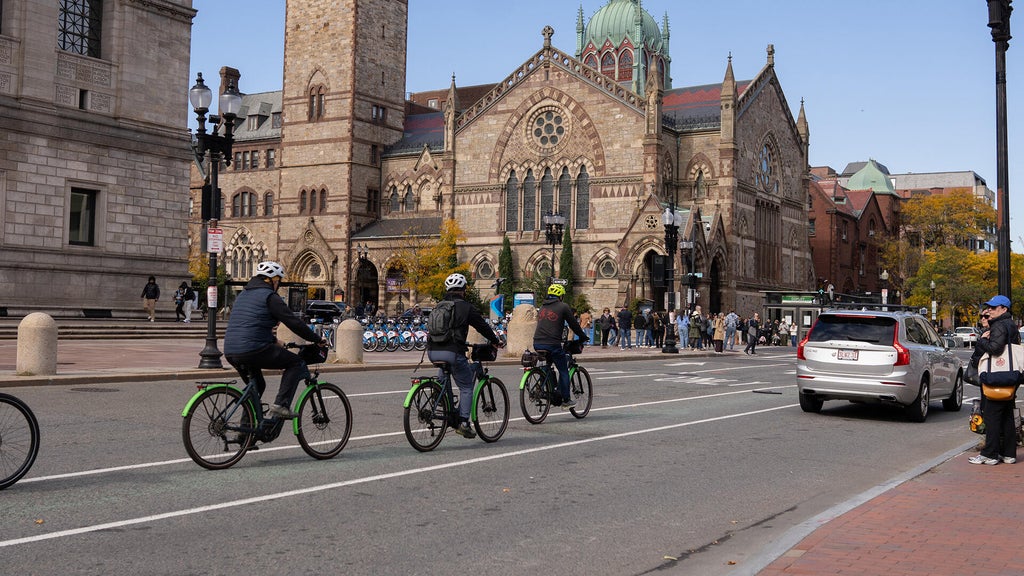
The family of a Boston woman killed while riding her bike is turning their grief into a call for change. Louisa Gag was struck by a truck and killed while riding her bike in Mission Hill. On Thursday, her family stood before Boston's City Council demanding action.
"We know all of you want to make sure no other family in Boston has to suffer the loss that we have," said Emily Gag, Louisa's sister.
Louisa Gag was a bike activist and transportation planner for the city of Boston. Her family wants to see new ideas brought to the city council.
In a meeting on Thursday, city officials began outlining potential changes they are researching, including a broader bike network.
"Well, basically, it's a bike lane that is away from vehicle traffic in case cars make the mistake of going into the bike lane, they will not hurt or injure our bicyclists," said Peter Cheung, a Boston bike advocate.
Cheung was at city hall when Gag's family spoke. He says the key to a network is to be both connected and protected.
"Anything with barrier protection: concrete, poles, cars, anything better than paint," said Cheung.
The city is working toward a Go Boston 2030 plan, which includes bike network improvements in key areas where crashes have occurred, and spots they consider missing links that connect people to popular destinations.
"Since this work has started taking annual bike counts since 2016, [we have seen a] 60% increase in ridership, and a 23% reduction in bike-related crashes," said Chris Osgood, Boston chief of streets.
The city's Parking and Curb Management team is taking a data-driven approach to change by analyzing aspects like truck density, bottlenecks and crashes.
"Mapping out exactly where, when, and how logistic activity is happening across Boston right now," explained Amelia Capone, director of Parking and Curb Management.
The team is looking into numerous interventions, especially when it comes to large trucks navigating city roads. This could mean dynamic pricing and smart loading zones.
"Creating incentives for businesses to receive their deliveries during off hours," said Capone.
City Councilor Ed Flynn says he has seen this work in New York, with deliveries coming throughout the night, instead of having trucks blocking sightlines and bike lanes by double parking during peak hours.
Boston's street team is actively exploring what governance they have to regulate private contracted trucks that do operate in the city. This would determine what they can and can't force them to do.
The city is also looking into what they are calling delivery lockers or microhubs. These are central locations where residents and companies can pick up deliveries on foot, by car, or with a smaller truck.


