
Last February, the National Weather Service (NWS) slashed operations after federal cuts were made across many government agencies due to the Department of Government Efficiency (DOGE) cuts.
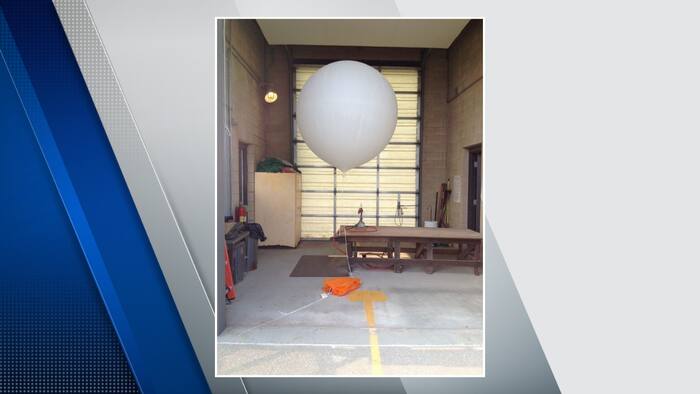
NWS staffing decreased, and one key tool that took a major hit in NWS’ daily operations was weather balloon launches. Weather balloons collect information on temperature, humidity, pressure, and winds aloft. This information is valuable for forecasting and helps models, AI and weather apps get a sample of the atmosphere in real time to help make better forecasts.
After budget cuts, NWS weather balloon launches went from twice a day to once a day, and some weather offices no longer had the staffing resources to launch at all.

This decrease in coverage and frequency worried meteorologist and forecasters across the country. Many were concerned if the quality of modeling and forecasting data would be downgraded due to the lack of data.
As we close out 2026, the NWS sounding website is showing more frequent and wider coverage depending on the day.
Here is 12 UTC on November 4, and there are no gaps in coverage.

Compare that to October 31, where the map shows no launches were done across portions of the High Plains into the Four Corners.

However, as I scrolled through other random days in October and other launch times, some days did show no gaps in coverage.
I reached out to the National Weather Service about the time changes, they agency stated “As of November 1, all NWS field offices that launch upper air balloons (92 in total) returned to a schedule of 00 UTC and 12 UTC (which translates to 6 pm and 6 am central time) for standard launches, per guidance issued on October 9, to ensure alignment with international guidelines established by the World Meteorological Organization.”
NWS also said that most of the sites were already operating on the 00 UTC and 12 UTC (6 p.m. and 6 a.m.) schedule but can’t rule out some sites being down periodically due to maintenance or other short term complications. The 92 stations also have the option to launch at 06 and 18 UTC ( 12 a.m. and 12 p.m. central time).
It is important to note that Houston never had and will not gain a weather balloon. However, the weather balloons across Texas and nationwide help meteorologists have a better grip on weather systems.
You can read why here: Weather balloon: Why Houston doesn’t have one


